The Ape Cave Meatball -- Mount St. Helens, WA
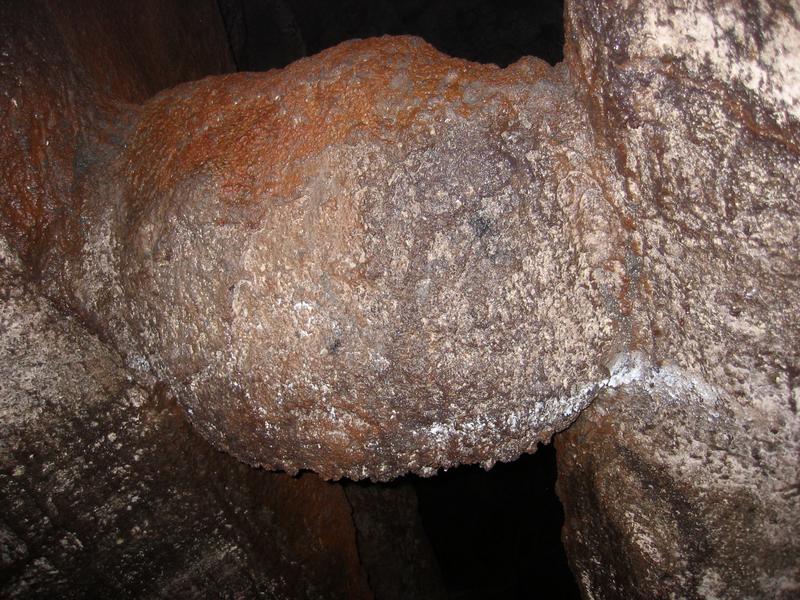
A formation in Ape Cave called "The Meatball". Ape Cave is actually what is called a lava tube, which is formed when lava flowing down hill begins to solidify. The top, sides, and bottom of the flow solidify first, since they are exposed to the cooler air and ground. If the top solidifies completely over, the lava underneath can flow out, leaving a tube. The Meatball is actually a native rock (in other words, one that was on or in the ground before the eruption, rather than a piece of the lava itself) that was flowing through the tube, and got caught in a narrow spot in the tube. It basically became welded in place, where it remains today. The narrow spot it is stuck in is actually a place where the cave began forming a second roof. The first roof solidified over, then the top of the lava still flowing inside began to solidify over, some feet below the original roof. This solidification process begins at the either side of the cave, and gradually grows together to form a complete roof. In the case of the Meatball, however, the roof did not completely form, instead leaving narrow space for the rock to become lodged. Ape Cave was discovered a few decades before the most recent eruption of Mt. St. Helens, indicating the volcanic history of the Cascades.